
Situational Leadership Style: Four Styles, Development Levels, and Evidence
Situational leadership style is an approach where leaders adapt their behavior to what a person needs for a task. The…
Kintex Consulting’s Insights platform delivers practitioner-grounded analysis on the leadership, talent, and organizational capability challenges that define enterprise performance. Our perspectives are drawn from the organizational reality of advisory engagements across Technology, Healthcare, and Financial Services in North America, Europe, Australia, and Canada – not from academic abstraction.
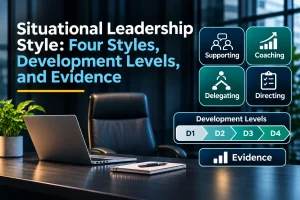
Situational leadership style is an approach where leaders adapt their behavior to what a person needs for a task. The…
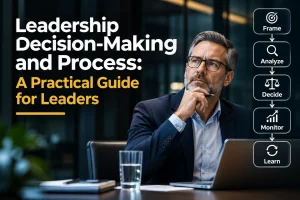
Leadership decision-making is the process leaders use to choose a course of action that commits people, money, or time. A…
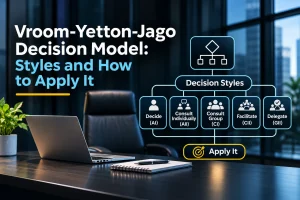
The Vroom-Yetton-Jago decision model tells a leader how much to involve a team in a specific decision. It matches one…

Autocratic leadership is a management style where one leader makes decisions alone. The leader sets direction, assigns tasks, and expects…

Participative leadership is a style in which the leader involves team members in decisions. The leader gathers input, weighs it,…
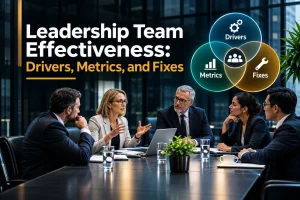
Leadership team effectiveness is the capacity of a company’s top leaders to reach shared goals together. Effective teams share a…

Leadership accountability is a leader’s obligation to answer for decisions, behavior, and results. It also means creating conditions where others…
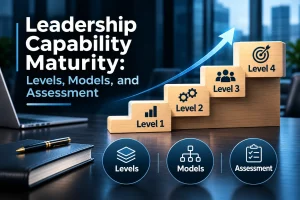
Leadership capability maturity describes how reliably an organization develops effective leaders. Maturity models rate that reliability on a staged scale.…
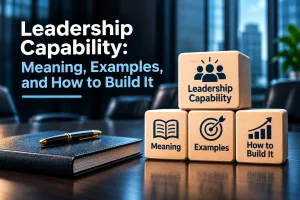
Leadership capability is a leader’s reliable ability to produce results through other people in a given context. It combines knowledge,…